

Best Fixed Blade Knife for Bushcraft & Camping: A Complete Buying Guide
When you're deep in the woods setting up camp, splitting kindling, or carving a feather stick to start a fire, your knife isn't just a tool — it's the one piece of gear you can't afford to fail. That's why serious campers and bushcrafters almost always reach for a fixed blade knife over a folder. In this guide, we'll walk through exactly what makes a fixed blade knife great for bushcraft and camping, the features worth paying attention to, and a few handcrafted picks from our own collection worth considering.
Why Fixed Blade Knives Are Better for Bushcraft & Camping
Reliability Over Convenience — No Moving Parts to Fail
A folding knife is built around a hinge and a lock. That's fine for everyday tasks, but under repeated heavy use — prying, batoning, twisting through tough material — that hinge is a weak point. A fixed blade knife has no joints, no springs, and nothing to jam or snap when you need it most. It's one solid piece of steel from tip to butt, which is exactly why it's the standard recommendation for anyone spending real time outdoors.
Fixed Blade vs Folding: When Toughness Matters Most
Folding knives still have their place — they're compact, pocket-friendly, and great for everyday carry in the city. But once you're batoning firewood, digging, or doing anything that puts lateral stress on the blade, a fixed blade simply holds up better. If you're deciding between the two for your next outdoor trip, the general rule is: the heavier and more demanding the task, the more a fixed blade earns its place in your pack.
Our Premium Fixed Blade Knives for Bushcraft & Camping
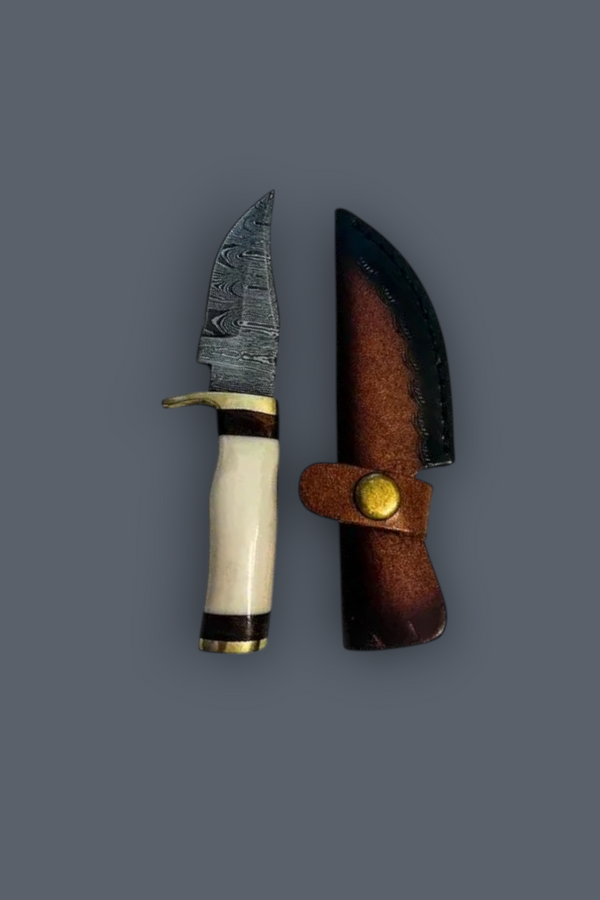
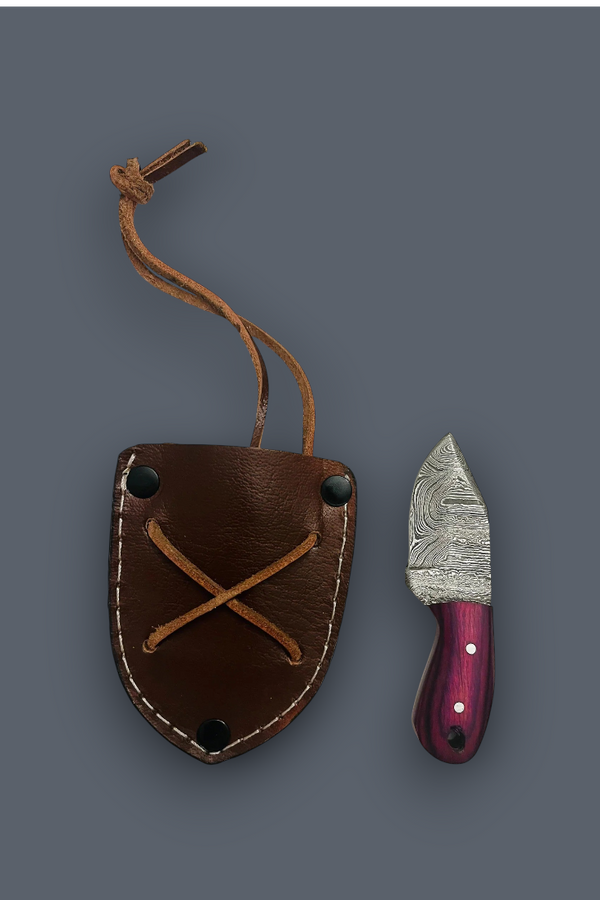
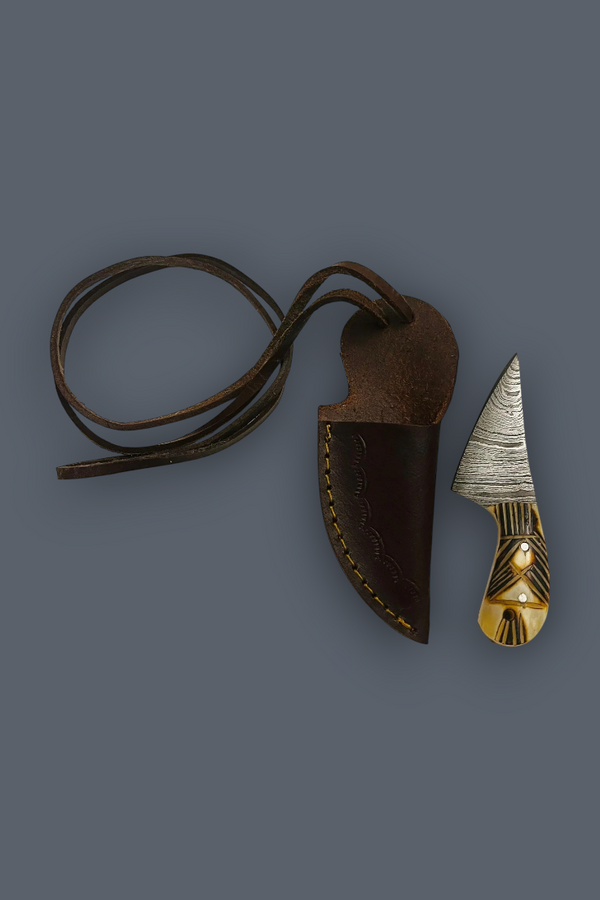
Shopping our Fixed Blade Knives collection? Here are seven handcrafted picks worth considering, from full-size camp companions to compact detail blades.
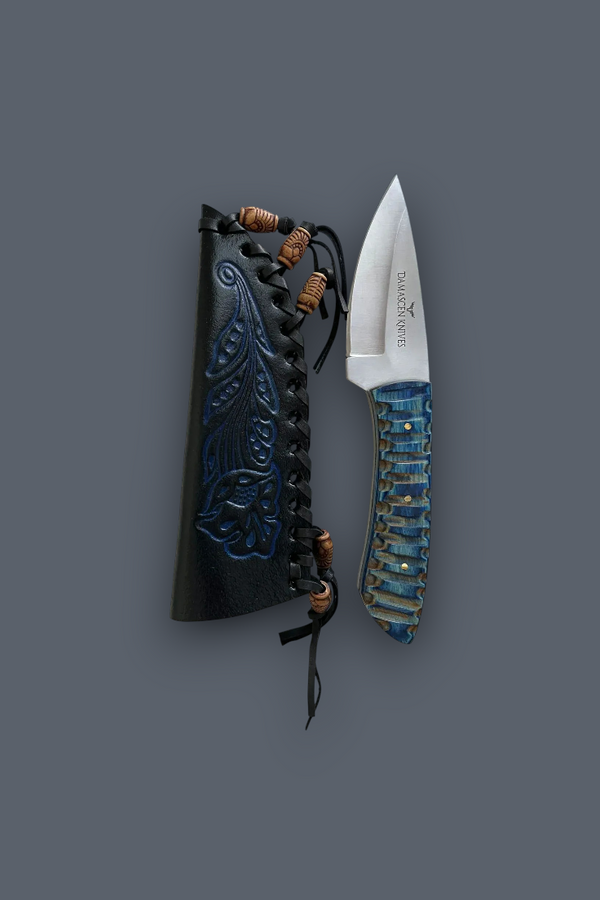
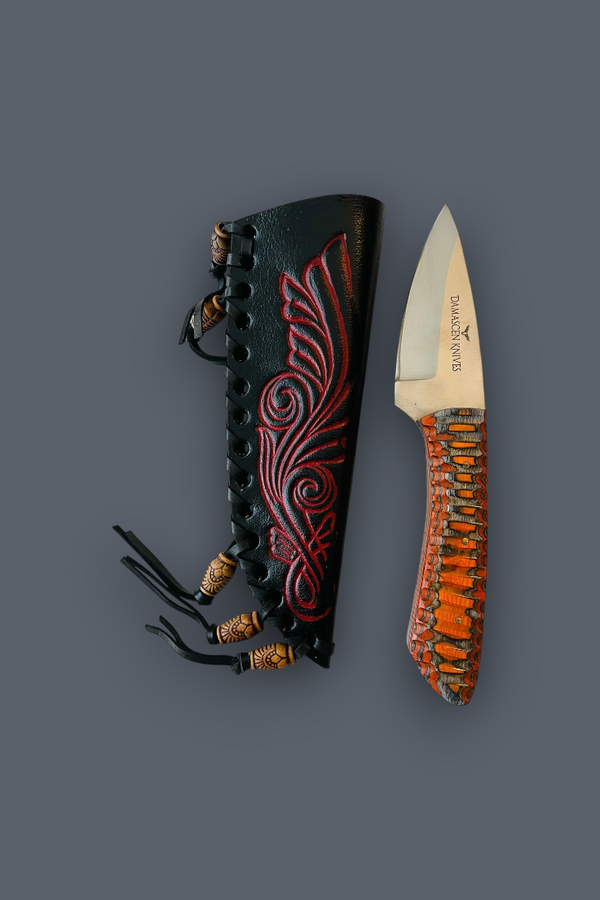
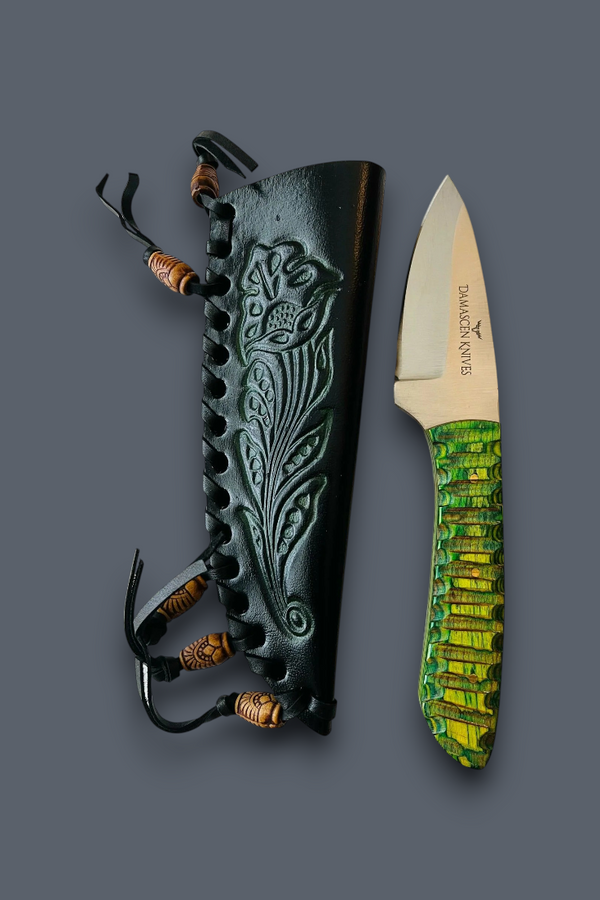
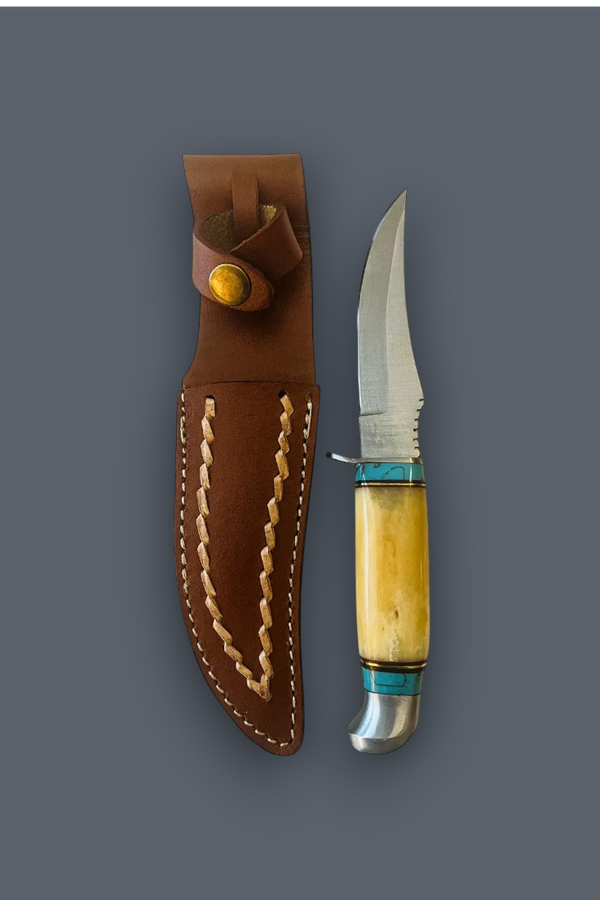
What to Look for in a Bushcraft & Camping Knife
Full Tang Construction — Non-Negotiable for Heavy-Duty Use
"Full tang" means the blade steel runs the entire length of the knife, all the way through the handle, rather than stopping partway or being a thin rod inserted into the grip. This is the single most important spec to check when buying a bushcraft knife. A full-tang design can handle batoning, prying, and hard chopping without the blade separating from the handle under stress — something a partial-tang knife simply isn't built to survive.
Blade Grind: Scandi vs Flat Grind Explained
The grind of a blade — the shape of its cross-section — determines how it performs on wood versus other materials. A Scandinavian (Scandi) grind has a single flat bevel that runs straight to the edge, making it excellent for carving, notching, and making feather sticks — classic bushcraft tasks. A flat grind, by comparison, tapers more gradually from the spine and handles slicing and general-purpose cutting a bit better. If woodcraft is your main use case, lean toward a Scandi-style edge; if you want an all-rounder for camp chores and field dressing, a flat grind offers more versatility.
Ideal Blade Length for Bushcraft (4–6 Inches)
Bigger isn't always better. Most experienced bushcrafters settle on a blade somewhere between 4 and 6 inches — long enough to baton small firewood and handle larger cutting tasks, but short enough to stay controllable for detail work like carving. Anything much longer starts to feel more like a machete than a bushcraft companion.
Steel Type — Damascus vs Stainless Steel
This is where personal priorities come in. Stainless steel blades resist corrosion and need less day-to-day maintenance, which makes them a practical choice if you're camping in wet or humid conditions and want a low-fuss knife. Damascus steel, on the other hand, is forged from multiple layers of folded steel, giving it excellent edge retention along with a distinctive, one-of-a-kind pattern down the blade. It asks for a bit more care — a wipe-down and light oiling after use — but rewards you with a blade that performs beautifully and looks like nothing else in your kit.
Handle Material & Ergonomics for Extended Field Use
You'll be gripping this knife for hours at a time — carving, batoning, prepping food — so comfort matters more than it might seem. Wood handles offer a warm, natural grip that only improves with use. Bone handles add texture and a secure hold even when wet. Whatever material you choose, look for a handle shape that fills your palm without hot spots, especially if you plan on extended sessions of detail carving.
Core Bushcraft Tasks Your Knife Should Handle
Batoning Firewood
Batoning is the process of using another piece of wood (or a rock) to hammer your knife blade through logs, splitting them into kindling without an axe. This is one of the toughest tests of a knife's build quality — it's where a weak tang or poor heat treatment will fail first.
Carving Feather Sticks & Notching
Feather sticks — thin wood shavings still attached to the stick — are a bushcraft fire-starting staple, and they demand a knife that holds a fine edge through repeated fine cuts. This is where blade grind and steel quality both show up in the final result.
Food Prep & General Camp Chores
Beyond the survival-skill tasks, your knife will also handle the everyday stuff: slicing food, cutting cordage, opening packages, and general camp cleanup. A good bushcraft knife needs to be just as comfortable doing this as it is batoning logs.
Why Damascus Steel Is a Strong Choice for Bushcraft Knives
Edge Retention in the Field
Because Damascus steel is built from folded, forge-welded layers, it combines the best properties of the different steels used — typically a harder, edge-holding steel paired with a tougher, more flexible one. The result is a blade that stays sharp longer through repeated carving and cutting, which matters a lot when you're miles from a sharpening stone.
Durability Under Repeated Stress
The layered construction that gives Damascus steel its signature pattern also makes it naturally resistant to chipping and cracking under the kind of repeated impact bushcraft tasks like batoning put it through — as long as it's genuinely full tang and properly heat-treated.
Craftsmanship That Doubles as a Collector's Piece
Every Damascus blade has a unique pattern — no two are exactly alike. That means your bushcraft knife isn't just a working tool; it's also a handcrafted piece worth holding onto and passing down, which is part of why so many outdoorsmen gravitate toward Damascus over mass-produced stainless options.
Caring for Your Fixed Blade Knife After a Trip
After a day in the field, give your blade a quick clean — wipe off dirt and moisture, dry it fully, and add a light coat of oil if it's carbon or Damascus steel to prevent rust before you pack it away. For a full breakdown of cleaning, storage, and rust prevention, check out our Damascus Knife Care & Maintenance guide.
Final Thoughts — Choosing the Right Bushcraft Companion
The best bushcraft or camping knife comes down to a few non-negotiables: full-tang construction, a grind suited to your main tasks, and a steel type that matches how much maintenance you're willing to put in. Whether you lean toward the low-maintenance reliability of stainless steel or the edge performance and character of Damascus, the right knife should feel like an extension of your hand out in the field.
Browse our full Fixed Blade Knives collection to find your next outdoor companion.
Frequently Asked Questions
Why is full tang important for a bushcraft knife?
A full-tang knife has steel running continuously from the blade tip through the entire handle, making it far stronger under stress like batoning firewood or prying. A partial tang is more likely to fail under the same demands.
What blade grind is best for bushcraft?
A Scandi grind is preferred for bushcraft because it bites deep into wood for carving and notching, while a flat grind performs better for slicing and general camp tasks.
Is Damascus steel good for camping and survival use?
Yes — genuine Damascus steel offers strong edge retention and durability under repeated stress, making it well-suited to bushcraft tasks. It does require a bit more maintenance than stainless steel to prevent rust.
What blade length is ideal for bushcraft tasks?
Most bushcrafters prefer a blade between 4 and 6 inches — long enough for batoning and larger cutting tasks, but still controllable for fine carving work.


