



Hunting knives have evolved over centuries, but one blade continues to stand out for serious outdoorsmen, hunters, and collectors: the Damascus steel hunting knife. Known for its distinctive patterns, rugged durability, and timeless craftsmanship, it has become an essential tool for people who value both performance and artistry.
Whether you're exploring the wilderness, preparing for a hunt, or simply expanding your collection of hunting knives, this guide will help you understand what makes Damascus steel so special—and how to choose the right knife for your next outdoor adventure.
What Is a Damascus Steel Hunting Knife?
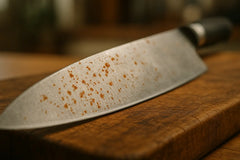
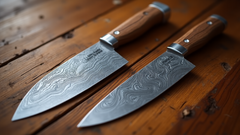
A Damascus steel hunting knife is crafted using layered, pattern-welded steel that creates the iconic swirling or wavy designs seen on the blade. These aren’t surface patterns; they are forged into the steel itself, creating a unique “fingerprint” in every blade.
A Brief History of Damascus Steel
The story of Damascus steel dates back more than a thousand years. Historically produced in regions like India, Persia, and Syria, ancient blades made from Wootz steel were legendary for their sharpness, flexibility, and battlefield performance.
These blades earned a reputation across Asia and Europe for being able to cut through lesser metals. The exact ancient technique was eventually lost, making authentic early Damascus blades incredibly rare today.
How Modern Damascus Knives Are Made
Modern Damascus knives are crafted through a detailed and highly skilled process known as pattern welding. This technique begins by stacking multiple layers of high-carbon and low-carbon steel together, heating them to extreme temperatures, and repeatedly folding and forging the metals into a single, unified blade. With every fold, the steel becomes cleaner, more refined, and more structurally sound, creating the distinct rippling patterns Damascus is known for. Bladesmiths then hammer, shape, and grind the steel to form the final profile, revealing the layers through careful etching and finishing techniques.
This method produces a knife with exceptional strength and durability because the layered steel structure distributes stress evenly throughout the blade. The combination of different steels also enhances edge retention, allowing modern Damascus blades to maintain sharpness through heavy use in the field. Each knife displays unique flowing patterns that cannot be duplicated, making every piece one-of-a-kind both in appearance and craftsmanship.
While the ancient art of true Wootz Damascus is lost, today’s pattern-welded Damascus preserves its legacy by delivering the same blend of performance, beauty, and resilience that has made these blades admired for centuries.
Why Choose a Damascus Steel Hunting Knife for Outdoor Adventures?
A reliable hunting knife can make all the difference when you're deep in the woods, preparing game, or handling camp tasks. A Damascus steel hunting knife stands out because it blends performance, durability, and craftsmanship into one dependable tool. Hunters and outdoor explorers trust it for its proven strength and long-lasting sharpness.
• Outstanding Strength & Durability: The layered steel construction makes Damascus incredibly tough and resistant to impact. It holds up to heavy outdoor use, whether you're skinning, cutting rope, or clearing small brush.
• Long-Lasting Edge Retention: Damascus steel maintains a razor-sharp edge far longer than many standard hunting knives. This gives hunters more precision and control, especially when dressing deer or large game.
• Reliable in Harsh Outdoor Conditions: Its flexibility and structural integrity prevent cracking, even in rough environments. From rain-soaked forests to dry, rugged terrain, Damascus remains consistent in performance.
• A Blade With Character & Craftsmanship: Every Damascus pattern is forged into the steel, creating a blade with its own personality. Hunters appreciate the combination of utility, artistry, and heritage in each handmade knife.
A Damascus steel hunting knife isn’t just handy; it becomes a dependable partner in the wilderness. Its unique blend of beauty and strength makes it a trusted choice for anyone who values reliability on their outdoor adventures. If you're looking for a tool that performs exceptionally while offering timeless craftsmanship, Damascus steel is hard to beat.
How to Choose the Right Damascus Steel Hunting Knife
With more hunting knives for sale today than ever before, choosing the right Damascus steel hunting knife can feel overwhelming. Below are the essential factors to consider so you can shop confidently and pick a knife suited to your outdoor needs.
1. Blade Style
Different hunting scenarios require different blade shapes, and understanding how each one performs helps you choose the right knife for your outdoor needs. For example:
- Drop point blades offer a thick spine and strong tip that make skinning safer and more controlled, which is why they’re often considered the best knives for deer hunting.
- Clip point blades have a sharper, thinner tip that excels at piercing and detail-oriented cutting, making them ideal for versatile outdoor use.
- Skinning blades feature a curved edge designed for clean, efficient hide removal with minimal effort during field dressing.
- Bowie-style blades provide extra size and weight, giving hunters more chopping power and making them suitable for survival tasks or more demanding outdoor conditions.
A Damascus knife crafted in the correct blade style becomes a reliable and versatile hunter knife, ready for everything from field dressing to demanding outdoor challenges.
2. Blade Length
Blade length plays a significant role in how your hunting knife performs in the field, and choosing the right size ensures you get the control and power you need. Short blades between 3–4 inches are ideal for skinning, fine carving, and detailed work because they offer precision and easy maneuverability. Medium blades in the 5–6 inch range are the most versatile, making them suitable for all-around hunting tasks, bushcraft work, and field dressing larger game. Longer blades measuring 7 inches or more provide the strength required for chopping, heavy outdoor use, and survival situations where power matters more than precision.
Most professionals consider medium blades the most balanced types of hunting knives, offering a dependable blend of control, durability, and overall usability for a wide range of outdoor activities.
3. Handle Material
A strong blade is only as effective as the handle that supports it, which is why choosing the right material matters just as much as the steel itself. The comfort, grip, and durability of your handle play a significant role in how your hunting knife performs outdoors. When shopping for custom hunting knives, matching the handle material to your environment and personal preference will make a noticeable difference.
- Wood handles offer a classic, timeless look with a warm, natural feel in the hand. Wooden handle knives perform best in dry climates and provide a reliable, traditional grip that many hunters love.
- Bone and antler handles provide a traditional aesthetic with the charm of handcrafted detail. Bone handle knives are slightly heavier but highly durable and well-suited for rugged outdoor use.
- Micarta and G10 handles deliver premium performance with exceptional grip and weather resistance. These materials stay dependable in wet, cold, or harsh environments where stability matters most.
- Resin and stabilized materials combine visual appeal with modern durability, featuring customizable colors and patterns. They resist moisture remarkably well and maintain their appearance even with heavy field use.
A knife’s handle should feel secure, balanced, and comfortable, especially during long outdoor tasks. Choosing the right material ensures your knife supports you reliably, whether you're hunting, camping, or tackling rugged terrain.
4. Tang Construction
A full-tang Damascus knife is crafted so that the steel runs through the entire handle, creating a much stronger and more dependable tool for outdoor use. This design improves the knife’s overall balance, enhances safety during heavy tasks, and provides better control when performing precision cuts. While partial-tang knives may feel lighter, they lack the structural integrity needed for demanding hunting or survival situations, making full-tang the superior choice for serious outdoor adventures.
5. Sheath Quality
Your sheath plays a significant role in safety, blade protection, and overall convenience, making it just as important as the knife itself.
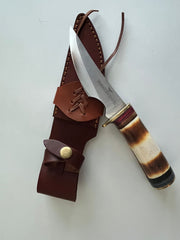
Leather sheaths offer a traditional, stylish appearance and are excellent for everyday carry, but they shouldn’t be used for long-term storage because leather can trap moisture and affect the blade over time.
Kydex sheaths are lightweight, durable, and highly weather-resistant, making them an excellent choice for hunters who move through wet or unpredictable environments.
When you shop for hunting & survival knives, always pay attention to the sheath quality—it’s a functional part of the tool, not an optional extra.
6. How to Spot a Genuine Damascus Steel Knife
The popularity of Damascus steel has led to a surge of fake or etched blades that only mimic the real pattern. Knowing how to identify authentic Damascus helps ensure you’re investing in a knife that offers true strength, beauty, and craftsmanship. With a few simple checks, you can quickly tell whether a blade is genuinely forged or simply decorated to look like Damascus.
• Look for layered patterns: Real Damascus patterns run deep through the steel rather than sitting only on the surface. The waves should look organic and continue across different parts of the blade.
• Check the spine: Authentic Damascus typically shows patterning along the spine, not just the blade face. This is a strong indicator that the steel was forged and layered correctly.
• Beware of perfectly uniform waves: If the patterns look too perfect or repetitive, the blade may be laser-etched or chemically printed. Genuine Damascus features natural variation that can’t be duplicated.
• Ask about the forging process: Reputable makers will readily explain their forging methods, layer counts, and materials used, especially when offering custom hunting knives. Transparency is a good sign of authenticity.
A real Damascus steel knife offers durability, performance, and actual handcrafted value that fake blades simply can't match. Taking a moment to check these signs ensures you’re choosing quality you can trust for years to come.
Best Uses of a Damascus Steel Hunting Knife Outdoors
A Damascus hunting knife isn’t just a collector’s piece; it’s built to work hard in real outdoor environments. Its strength, sharpness, and reliability make it a versatile tool for hunters, campers, and survivalists alike. Whether you're deep in the wilderness or setting up camp, this knife adapts to a wide range of essential tasks.
- Skinning & dressing game: The razor-sharp edge allows for clean, precise cuts when working on deer, elk, or other big game. Its control and smooth slicing reduce effort and improve overall field efficiency.
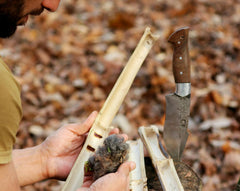
- Bushcraft & wood processing: From carving wood to cutting branches and feathering sticks, Damascus handles detailed bushcraft tasks with ease. Its durability makes it ideal for fire prep and crafting tools on the go.
- General camp use: A Damascus blade excels at everyday camp duties like food preparation, rope cutting, and utility tasks. It’s a dependable companion for both quick chores and longer outdoor routines.
- Emergency or survival situations: Its toughness brings confidence when conditions get unpredictable. Whether breaking down materials or handling unexpected challenges, it remains a trustworthy tool.
If you’re searching for the best knives for deer hunting or multifunctional outdoor use, a well-crafted Damascus knife consistently outperforms mass-produced alternatives. Its blend of performance and durability makes it an essential part of any serious hunter’s kit.
Damascus Steel vs. Standard Steel
Choosing the right hunting knife often comes down to understanding how different steels perform in real outdoor conditions. Damascus steel has a long-standing reputation for its blend of strength, sharpness, and craftsmanship, while standard steels focus more on consistency and affordability. Comparing the two helps you decide which material best fits your hunting style and long-term needs.
|
Feature |
Damascus Steel |
Standard Steel |
|
Edge Retention |
Excellent |
Fair |
|
Durability |
High |
Moderate |
|
Aesthetic |
Unique layered patterns |
Plain, uniform |
|
Heritage |
Hundreds of years |
Modern production |
|
Collectability |
High |
Low |
While standard steel hunting knives can perform adequately for basic tasks, Damascus offers a rare combination of performance and beauty that many hunters find worth the investment. Its unique patterns and enhanced durability make it a favorite among those seeking more than just a functional blade. For anyone who values craftsmanship alongside capability, Damascus steel consistently stands out as the superior choice.
Caring for Your Damascus Knife
Proper care is essential to keep your Damascus knife sharp, rust-free, and ready for outdoor use. Always wash the blade with mild soap and warm water, avoiding harsh chemicals and never soaking it for extended periods. After cleaning, dry the knife thoroughly to prevent moisture from settling into the steel. Apply a light coat of mineral oil to protect the blade, and avoid using vegetable oils, as they can turn sticky or rancid over time. For a deeper guide on maintaining your blade, you can also explore our article “How to maintain damascus steel knives for lasting performance and rust prevention”, which covers long-term care practices in more detail. When sharpening, use a whetstone and maintain an angle of about 20 degrees, steering clear of electric grinders that can damage the steel. With consistent cleaning, drying, oiling, and proper sharpening, your Damascus knife will remain a dependable part of your outdoor gear for years to come.
Common Mistakes to Avoid:
- Leaving your blade wet
- Keeping it in a leather sheath long-term
- Cutting bone or metal directly
- Over-sharpening with electric tools
Avoiding these ensures your Damascus knife stays beautiful and functional for years.
Buying the Best Damascus Steel Hunting Knives
When you’re ready to invest in a reliable Damascus steel hunting knife, focus on three key things: true forged Damascus steel (not just etched), full-tang construction, and a trusted brand with transparency about materials and craftsmanship. Below are three brands that stand out in the category.
Damascen Knives
Damascen Knives offers handcrafted pieces using premium Damascus steel, emphasising durability and aesthetic quality. At Damascen knives, each knife is made with exceptional attention to detail, built for both function and style. If you’re seeking a hunting knife that feels artisanal yet ready for real outdoor use, Damascen is a solid choice.
Buck Knives
Buck Knives, a long-standing name in outdoor and hunting knives, has released Damascus steel variants in their “Legacy Collection,” like the 590 Paradigm Damascus. Their reputation for reliable build and outdoor readiness adds confidence if you prefer a brand with a deeper heritage.
Forseti Steel
Forseti Steel crafts handmade Damascus steel knives and highlights their attention to historical styles and high-quality materials. For buyers who want a unique piece with both performance and design flair, Forseti offers compelling options.
A high-quality Damascus knife should feel balanced, trustworthy, and capable of handling both delicate and demanding tasks in the field. Choosing a reputable brand ensures you get genuine craftsmanship rather than mass-produced imitation. With the right Damascus steel hunting knife, you’re investing in a tool built to last and perform for years of outdoor adventures.
FAQs About Damascus Hunting Knives
1. Is Damascus steel good for a hunting knife?
Yes, Damascus steel is excellent for hunting knives because it holds a sharp edge exceptionally well and performs reliably in the field. Its layered construction also provides added strength and durability during skinning, dressing, and outdoor tasks.
2. What kind of steel is best for hunting knives?
High-carbon steels like Damascus, 1095, and certain stainless steels such as S30V or VG-10 are popular choices. These steels balance edge retention, strength, and corrosion resistance, making them ideal for real hunting conditions.
3. What’s the difference between regular steel and Damascus steel?
Regular steel is typically made from a single, uniform metal composition, while Damascus steel is created by forging multiple layers of steel together. This gives Damascus its signature patterns, improved toughness, and superior edge retention.
4. What is a hunting knife?
A hunting knife is a specialized outdoor tool designed for skinning, dressing game, and performing general field tasks. Its blade shape, size, and strength are optimized for precision and control during hunting activities.
5. What are the benefits of Damascus knives?
Damascus knives offer exceptional sharpness, long-lasting edge retention, and impressive durability. They also feature unique, hand-forged patterns that make each knife visually distinct and highly collectible.
6. What is the purpose of a hunting knife?
A hunting knife is used for processing game, cutting through hide and tissue, and performing camp or survival tasks. Its design helps hunters work safely, efficiently, and with greater control in outdoor environments.
Conclusion
A Damascus steel hunting knife is more than just gear; it’s a dependable companion shaped by centuries of craftsmanship and built for real outdoor performance. From choosing the right blade style and handle material to understanding authenticity and proper care, every detail plays a role in how your knife serves you in the field. Whether you're an experienced hunter, an outdoor enthusiast, or simply searching for reliable hunting knives for sale, selecting a well-made Damascus knife ensures strength, precision, and lasting value. With the right choice, you’re not just buying a blade, you’re investing in a tool that enhances every adventure and stands the test of time.








Comments