



If you’ve spent five minutes looking at high-end knives, you’ve encountered "Damascus." The name conjures images of ancient forges and mesmerizing, watery ripples. But look closer, and pros use a boring term: Pattern Welded Steel.
In my years at the anvil, I’ve realized this isn't just a naming issue; it’s a gap between ancient legend and modern engineering. For collectors and makers, knowing the difference is vital. It’s the choice between chasing a lost history and owning a masterpiece of 21st-century metallurgy. Let’s clear the air on what you’re actually buying.
What is Damascus Steel?
Originally, Damascus steel refers to ancient blades forged in the Middle East from Indian "Wootz" steel. It is a high-carbon crucible steel famous for its "watery" surface patterns and legendary strength. Because the original forging process vanished in the 1700s, it remains one of history’s greatest metallurgical mysteries.
Key characteristics:
- Melted in sealed crucible pots rather than layered and folded at an anvil.
- Made from specific iron cakes containing trace elements like vanadium and tungsten.
- Designs are formed by internal crystalline carbide structures, not mechanical layers.
- Features a fluid, silk-like visual flow rather than geometric or forced shapes.
- Ancient blades contained natural carbon nanotubes for extreme durability and flexibility.
What is Pattern Welded Steel?
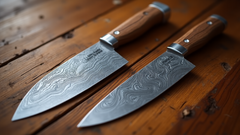
Pattern welded steel is the modern method used to create the striking visual designs we commonly call Damascus today. It involves forge-welding multiple layers of different steel alloys together into a single billet, which is then folded and manipulated. This process combines the best properties of various metals to create a blade that is both incredibly tough and visually stunning.
- Forged by stacking and hammer-welding alternating layers of high-carbon and nickel-rich steels.
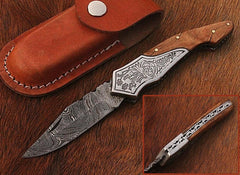
- Requires repeated folding, twisting, or drilling to create specific geometric designs, such as "Raindrop" or "Ladder."
- Patterns are revealed through an acid etch that darkens high-carbon layers while leaving nickel layers bright.
- Combines the hardness of brittle steel with the flexibility of softer alloys for superior structural integrity.
- Offers highly predictable, consistent performance through the use of modern, laboratory-grade alloys.
Difference Between Damascus vs Pattern Welded Steel
To help you distinguish between these two often-confused metals, here is a direct breakdown of how they differ in construction, appearance, and performance.

Construction Method: Ancient Damascus is a single ingot melted in a crucible, while pattern welding is a mechanical "sandwich" of multiple steel bars.
Internal Structure: Damascus relies on microscopic crystalline growth (carbides), whereas pattern welding uses visible, macro-scale layers of different alloys.
Pattern Source: The designs in Damascus knives are natural and organic results of slow cooling; pattern-welded designs are intentionally engineered by the smith's folding and twisting.
Material Purity: Pattern welded steel uses modern, high-grade laboratory alloys, making it more consistent and reliable than the inconsistent "Wootz" cakes of the past.
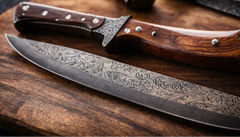
Visual Style: Damascus features a subtle, "watered" silk texture, while pattern welding creates high-contrast, bold, and repeatable geometric patterns.
Historical Availability: True crucible Damascus is an extinct art form with no modern commercial production, whereas pattern welding is the standard for high-end custom knives today.
Comparison Table
| Feature | Ancient Damascus (Wootz) | Modern Pattern Welded Steel |
|---|---|---|
| Primary Method | Crucible-melted "Wootz" cakes | Forged layers of different steel alloys |
| Visual Texture | Organic, microscopic "water" lines | High-contrast, intentional patterns |
| Carbon Content | Extremely high (and inconsistent) | Precisely controlled and balanced |
| Internal Structure | Crystalline (Carbide bands) | Laminated (Mechanical layers) |
Why the Distinction Matters in 2026
You might be wondering, "If everyone calls it Damascus anyway, why should I care about the technical name?" As an expert, I believe there are three reasons this matters for your wallet and your collection:
1. Performance and Reliability
Modern pattern welded steel is arguably superior to ancient Damascus. Because we have access to clean, laboratory-grade alloys, a modern pattern-welded blade is more consistent, less likely to have "cold shuts" (weak spots), and easier to sharpen.
2. Spotting the Fake Damascus
The market is currently flooded with cheap, mass-produced "Damascus." These are often made from scrap metal in unregulated forges. By understanding pattern welding, you can ask the right questions: What are the base alloys? What is the HRC (Rockwell Hardness)? If a seller can’t tell you the two steels used in the pattern weld, walk away.
3. The Micro-Serration Theory
One of my favorite "smith secrets" is the micro-serration effect. Because pattern-welded steel uses two different hardnesses of metal, the edge wears down at slightly different rates. This creates a microscopic "saw" effect that keeps the knife cutting long after a mono-steel blade would feel dull.
Choosing Between Damascus and Pattern Welded Steel
Choosing between these two depends entirely on whether you are a history collector or a functional user. Since true ancient Damascus is no longer manufactured, your choice usually comes down to a modern reproduction versus high-quality pattern welding.
Which One Should You Buy?
- The Practical User: If you want a knife for daily kitchen use, hunting, or heavy-duty tasks, buy Pattern Welded Steel. It offers predictable modern performance, incredible toughness, and is much easier to find from reputable makers who use laboratory-certified alloys.
- The Historical Purist: If you are a museum-grade collector, look for Wootz (Crucible) Steel. While you won't find "ancient" blades for sale easily, some modern master smiths have "rediscovered" the crucible method; buy this if you value the mystery and organic soul of the steel over raw cutting stats.
- The Value Seeker: Avoid anything labeled "Damascus" that costs less than $100 for a large blade. At that price, you aren't buying either of these; you’re likely buying "mystery meat" steel that is acid-etched to look the part but will fail during its first real use.
Modern Damascus steel knives also offer performance, beautiful patterns, and a premium feel. If you’re looking for high-quality, rust-free kitchen knives, you should definitely consider Damascus steel kitchen knives from reputable sources.
Care & Maintenance for Pattern Welded Steel
Because pattern-welded steel uses high-carbon alloys (like 1084 and 15N20), it isn't "set and forget." Without proper care, your blade’s contrast will fade under a layer of rust.
How to Care for Your Blade
- Dry Instantly: Hand-wash with mild soap and dry immediately. Never let it air dry, especially after cutting acidic foods.
- Oil the Surface: Apply a thin coat of food-safe mineral oil or blade wax to create a moisture-proof seal.
- Skip the Dishwasher: High heat and harsh detergents will ruin the steel's temper and destroy the etched pattern.
- Smart Storage: Avoid long-term storage in leather sheaths; they trap moisture which causes deep pitting.
- Pro Refresh: If the pattern dulls over time, a professional can re-etch the blade in ferric chloride to restore the "pop."
Care & Maintenance for Damascus Steel
When it comes to caring for a genuine Damascus or Wootz blade, the stakes are even higher. Because of its unique crystalline structure and historical value, you have to be vigilant about oxidation to preserve the intricate "watery" patterns that make these blades so legendary.
How to Maintain Damascus Steel
- Strict Hand-Washing: Never leave a Damascus blade in the sink. Use warm water and mild detergent, but avoid abrasive sponges that can scratch the surface.
- Mastering the Routine: For a deeper look at long-term preservation, check out our guide, How to Maintain a Damascus Steel Knife for Lasting Performance, which covers the specific stepsfor professional-grade upkeep.
- Microfiber Only: Always use a clean microfiber cloth to dry the blade. Any moisture trapped in the tiny crevices of the crystalline structure can lead to "micro-rusting."
- Mineral Oil or Wax: Since ancient-style Damascus is high-carbon, it needs a protective barrier. A light wipe of mineral oil or a museum-grade wax after every use is mandatory.
- Control Your Environment: Store these blades in a low-humidity area. If you live in a coastal region, the salt in the air is your biggest enemy.
Conclusion
Choosing between pattern-welded and ancient Damascus steel isn't just about picking a metal; it’s about deciding between a legendary mystery and a modern engineering marvel. While the original Wootz process remains a ghost of history, today's pattern-welded blades offer a superior blend of artistry and high-performance durability that ancient smiths could only dream of. By understanding these distinctions and committing to proper maintenance, you ensure that your blade remains a functional masterpiece for generations. If you’re ready to own a piece of this stunning craft, explore our collection of expertly forged blades at Damascen Knives to find a knife that perfectly balances historical beauty with 21st-century strength.
Frequently Asked Questions
What is pattern-welded steel?
Pattern-welded steel is a process in which two or more different steel alloys are layered and forge-welded together under extreme heat and pressure. The resulting billet is folded and manipulated to create the striking, high-contrast designs often seen on modern custom knives.
Is pattern-welded steel good?
Yes, pattern-welded steel is excellent for both aesthetics and performance when crafted by an expert. By combining hard, high-carbon steel with tougher, flexible alloys, the blade gains a superior balance of edge retention and structural durability that mono-steels often lack.
What is the difference between Damascus and pattern-welded steel?
"Damascus" is a broad historical and marketing term, whereas "pattern-welded" refers to the specific modern mechanical process. While ancient Damascus was made from crucible-melted Wootz steel, nearly all Damascus sold today is pattern-welded steel of high quality.
Does pattern-welded steel rust?
Because most pattern-welded steel is made from high-carbon alloys rather than stainless steel, it is prone to oxidation and rust if not maintained. To protect the blade, keep it dry after use and occasionally coat it with a thin layer of food-safe mineral oil.
What type of welding is best for steel?
In the context of blade making, forge welding is the gold standard for creating pattern-welded steel as it joins layers at a molecular level. In other industries, TIG welding is often preferred for its precision and clean, high-strength bonds.
What is the difference between pattern-welded and Wootz?
The primary difference is the formation of the pattern: Wootz steel forms naturally as internal crystals during slow cooling in a crucible. In contrast, pattern-welded designs are manually engineered by a smith who stacks, folds, and twists layers of solid metal.















Comments